Monday, 28 December 2015

Eco-criminals


Companies who use palm oil are under increasing pressure to become more transparent about their environmental and social impacts. This pressure is associated with increasing consumer awareness of issues such as sustainability, but is this pressure enough to demand a sustainable future using palm oil, before the environmental damage is irreversible?


For many of the companies hoping to make their products “free from deforestation”, traceability of palm oil and its derivatives is vital in understanding the supply chain and commit to sustainability.


  • Member of the RSPO but refuses to disclose the percentage of which their palm oil is certified as sustainable as they do not track the journey of their palm oil back to the plantation source. 
Starbucks


  • NGOs including the Sierra Club, Union of Concerned Scientists and the Rainforest Action Network have urged Starbucks to pioneer more environmentally conscientious moves to prevent deforestation and increase the sustainability of its supply chain. Starbucks has previously promised to work on their environmental friendliness, but as consumer awareness increases, stakeholders have less tolerance for pledges that are unsupported by evidence.


Political corruption is also an issue. For example, in Riau, the former governor, Rusli Zainal was charged because he was caught distributing illegal permits for logging in an attempt to finance his political campaign. Companies are able to avoid legislation because of the confusing and conflicting ownership structures of the land which makes it hard to enforce efficient rules regarding forestry and farming. Indonesia's president, Joko Widodo, suggests that it will take a significant amount of time to mitigate the effects of the haze and palm oil plantations. Widodo had previously promised to 'reinvigorate the economy and increase infrastructure spending', but many people have become disillusioned that change will happen as the progress is not as quick as many would like to see. Investment and a good business environment is vital to stimulate the industrialisation Widodo seeks to emulate.

Tuesday, 22 December 2015

The costs of environmental damage


Deciding the value of the rainforest and putting a monetary valuation on nature is a complex process and depends on a group’s viewpoint on natural resources.

The environmental damage is essentially a short-term economic answer which provides an industry in developing countries to people who live below the poverty line.
  • However, the ownership structures of the land is complicated. Communities who have resided and lived on the land for generations, are forcibly displaced and find that plantations have been developed on land they had previously managed for crops, building materials and medicines.
  • High demand for palm oil and subsequent peatland destruction to make way for plantations, is normally spearheaded by large corporations, who have little concern about small farmers. Similar to many other scenarios regarding industrial and economic development using natural resources in developing countries, it is the individual, community-level actors who lose out, and transnational corporations who reap the most benefits.
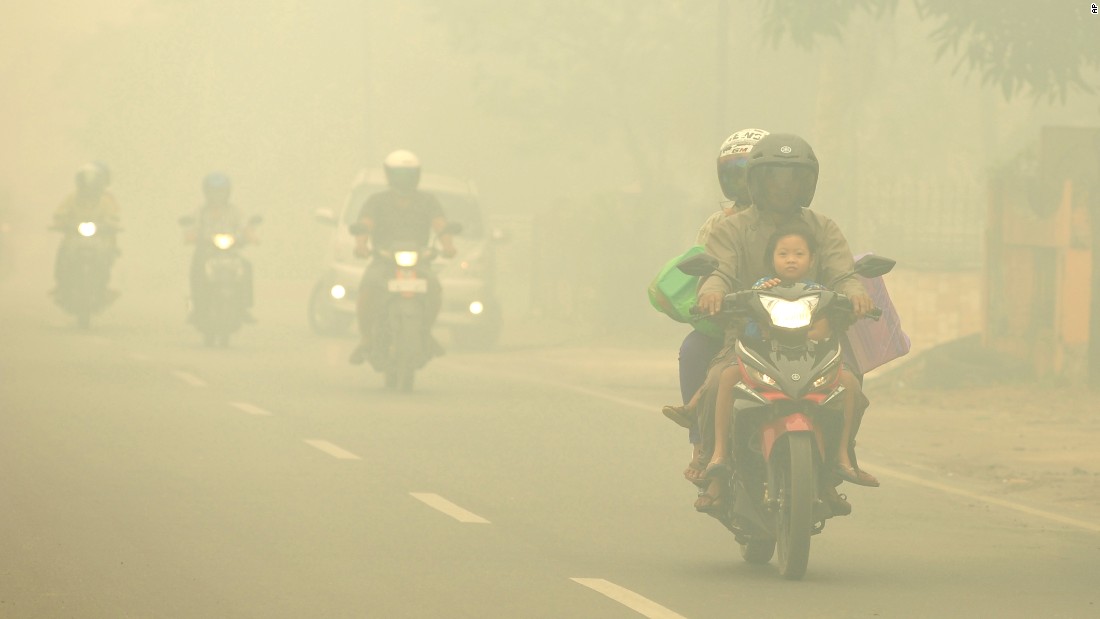
  • Populations living in the surrounding regions also must contend with the air pollution from deforestation and peatland destruction. Over the past decade, the haze has gained increasing recognition because of the level of air pollution and how detrimental it is to respiratory health.

  • Peat burning exposes tree roots as the dry peat is burnt down to the water table. Peat subsidence occurs as the vegetation becomes unstable and this induces a cycle of tree falls and loss of more forest as the peatland becomes unsuitable for vegetation.
  • Tree mortality is high as tress found in tropical rainforests are not adapted to fire. Collapse of the peat as support increases the rate of tree mortality.
  • Fauna is impacted directly in terms of habitat destruction but the air pollution and smoky conditions produced by fires can cause harm to the respiratory systems of animals too. For example, endangered species such as the Sumatran Orangutans are put at increasing risk.

  • Pollutant Standard Index (PSI) measures level of particulate pollution in the air and during haze season this year, some of the most affected areas have reached PSI levels of 2000 when PSI 300 is already considered hazardous
  • As of the end of October, 19 people had died due to haze-related respiratory ailments and hundreds of thousands of cases of respiratory disease were reported in direct relation to the peat forest burnings.

 
  • The economic losses are great and the cost of deforestation has affected the Indonesian economy largely over the past decade. The haze in 1997-1998 cost Indonesia US$20.1billion and the World Bank estimated that the haze this year (2015) had cost approximately US$15.72billion, an amount more than twice spent to aid reconstruction and tsunami clear up after the Acah tsunami in 2004. This economic loss correlates to 1.9% of Indonesia’s GDP but the economic cost to the entire region is undoubtedly much more.
  • While the palm oil and pulp wood industry offers a level of beneficial economic development, the uncontrollable fires are creating economic losses which are counteracting the development of the region and contributing to poverty at the local level.