The air pollution
problem in South East Asia is not a recent environmental issue. The timely
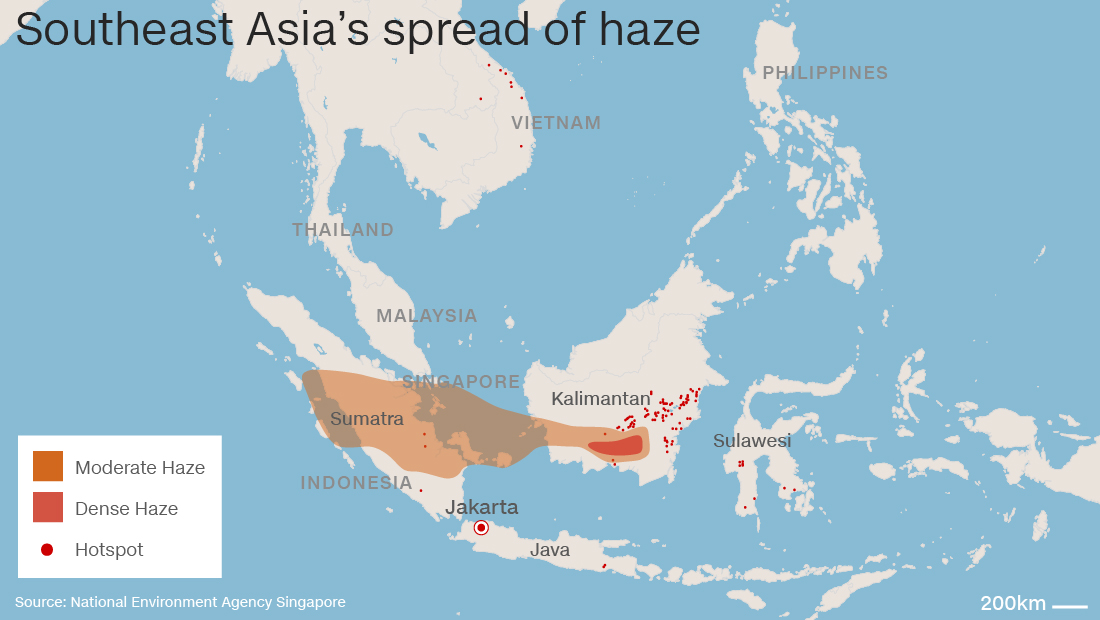
coincidence of this year's haze season and the prolonged dry season drought
attributed to El Niño (Guardian, 2015), has resulted in the worst haze and one
of the most severe events on record in 20 years (Time, 2015). The haze has been
described as a "crime against humanity" (BMKG, 2015), especially as
the thick smog air pollution has disrupted everyday routines. Communities
dealing with the haze have had to cope with school closures and transport
disruptions, in addition to the risks of respiratory infection. CNN (2015) states that
there have been half a million cases of acute respiratory infection recorded
since July, showing that the human cost of exposure to particulates is very
high.
(Time, 2015) - "Haze Chokes South East Asia"
The structure of the
palm oil supply chain filters down to larger corporations subcontracting to
smaller companies and farmers. To meet the demand for palm oil, forest fires
are started illegally, yet it could be argued that these small scale
stakeholders are acting based upon economic benefit as to them, it outweighs
the environmental cost (Pilloud, 2015). Haze pollution is a yearly occurrence
and an annual air quality problem - what is being done about it? Who enforces
the regulations put in place to penalise those who contribute to the haze?
Whilst the Indonesian
Meterology, Climatology and Geophysics Agency (BMKG) might be portraying the haze as a "crime against
humanity", but for the most part, the Indonesian government has turned a blind eye to the activities of companies in the peatlands. We need to consider who is responsible, and whether they are doing
anything to help alleviate this environmental disaster?
Apologies for the
delay in uploading my second post! It seems that there is not much of a
correlation between the creators of the environmental problem and the people
who are most affected. I'll leave that with you to think about. Until next
time!

Hi Melissa, A very interesting blog highlighting the major impacts of palm oil supply. I have some general questions you may be able to answer on the topic. Does the Indonesian government not implement any policies of a sustainable use of palm oil or a reduction of air pollution in some way? As I am sure they are aware of these negative impacts.
ReplyDelete